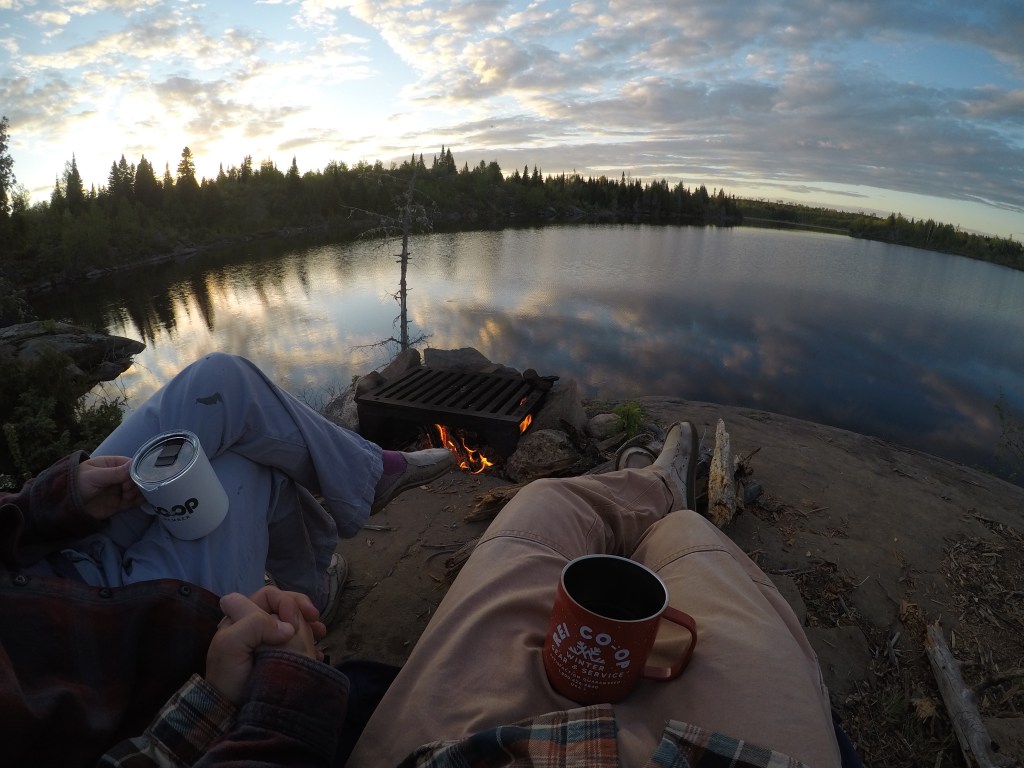
You got your permits, you’ve brushed up on skills, you’ve made some decisions about your trip…..it’s time to start packing.
This post will be broken down to personal and group packing. Next post will cover food.
Remember this is how WE like to pack, we’ve fine tuned over the last several years. We enjoy evaluating what we packed and improving it over the years. So take it all with a grain of salt. For us, packing this way helps up to strike the ever important balance I think every backcountry traveler must make for themselves; which is really comfort. Bringing too much stuff (things you think will make you comfortable) is often uncomfortable. The added weight and work deters from that. We bring the things that, for us, add to and don’t take away from our experience. The photo above? We’re in chairs. New to us last year-and such a game changer!!!! Can not stress them enough! Hear me out.
We have the REI Flexlite Camp Chairs and we love them. Yes you can get lighter weight ones, but these are light enough for us, and the price is important given how much time they spend by the fire.
When we first starting going to the BW, we were in our 20’s and things felt different. Sitting against a log with a Crazy Creek (wonderful for the boat too) like chair was comfort. As we approach (gulp) our 40’s that strain on our hamstrings and lower backs makes sitting by the fire at night significantly less relaxing. These chairs have made all the difference for us. Last year it rained A LOT on our trip. Being off the wet ground was so much better.
But this is my point. At one point in our lives-the chairs had little value, now at another point in our lives their value has changed and increased. Everyone must decide the value of their items for themselves. I’ll do my best to detail a few items we think make the most difference.
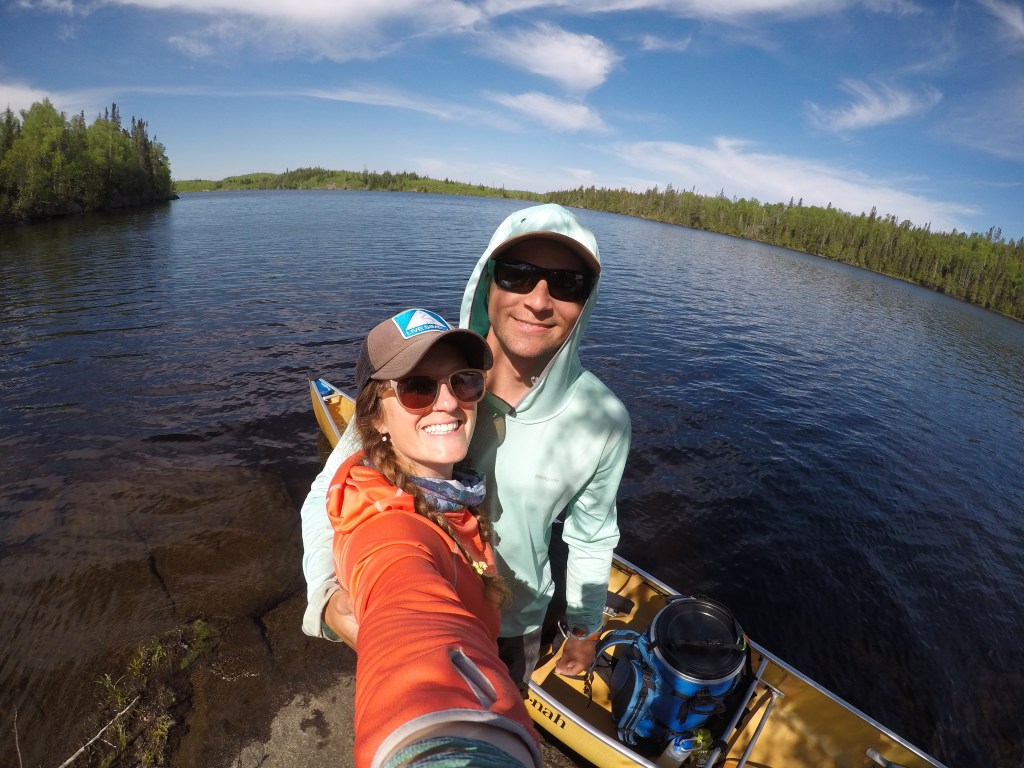
When packing personal equipment-clothing-we like to follow the system below.
Pack 3 outfits: Listen closely. Outfit A) Boat Clothes Outfit B) Camp Clothes Outfit C) Tent Clothes. Outfit A and B can both be sprayed with permethrin.
https://www.rei.com/product/768970/sawyer-permethrin-pump-spray-24-oz
This is how I stay clean, dry and don’t over pack. That means that if I have 3 days or 7, I mostly pack the same amount of clothes.
Outfit A: My boat clothes are all non-cotton, quick-dry and nylon/polyester; shorts, lightweight top and a fleece insulated layer-something that insulates even if wet. All clothes that are appropriate for submersion. I wear them every day. This way I never risk soaking my other clothes in case of a tip-I even include a pair of socks to wear in case of blisters. Boat clothes also include a trucker hat, Buff (to keep bugs off me) and *shoes appropriate for portaging.
Outfit B: My camp clothes are comfortable, and usually a heavier fabric to stand up to camp and bugs. I like something like a Carhartt pant, soft t-shirt and a flannel. My camp clothes always include a beanie. Even in summer-nights in the Northwoods are cool, especially after a day in the sun and on the water! Camp clothes also include a warm layer (like a puffy) and socks and shoes for camp. I like lightweight but sturdy shoes like the ReEmber from Teva.
Outfit C: Tent clothes (pst….pajamas) keep my sleeping bag clean and guarantee warmth. If I need to use bug spray at camp, I don’t want it on the down of my sleeping bag. This means I get mostly clean before entering the tent. I start the next day pretty fresh, sleep comfortably and my gear lasts even longer! Tent clothes should also include “Vampire Socks-They never see the light of day” Not my name but it’s fabulous and I’ve kept it! No matter what happens; I tip my boat during the day, it rains at camp…..no worries, I have dry clothes and socks to wear that night no matter what.
This 3 part system means I pack all my clothes in a small stuff sack-not bad for a week long canoe trip!
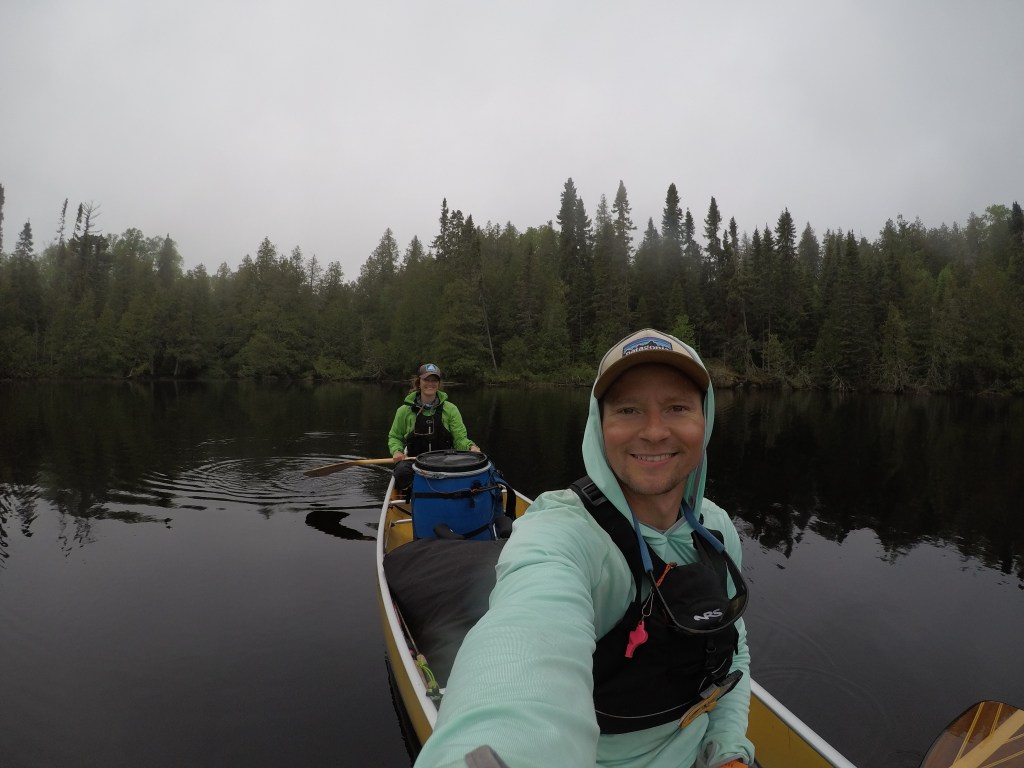
When it comes down to packing group gear-I like to think of a day from start to finish. Travel, camp, eating and sleeping. As I visualize the day-this helps ensure I pack the things we need. I’ll do the same thing when it comes to meal planning. I also like to pack in categories. I’ve attached my PDF packing list that I like to go off of from year to year. Some items on the list are brand specific-helps us differentiate items. If you have questions, ask me!!! I’d love to discuss my list or help with yours.
Sleeping:
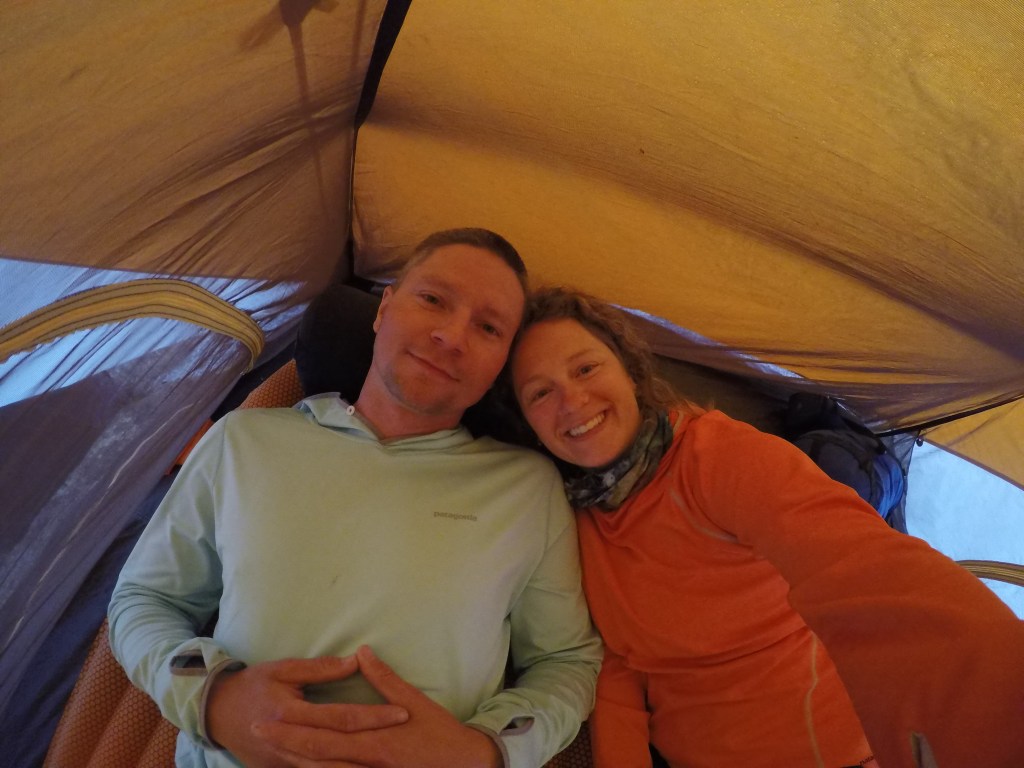
Getting a good night sleep is important-especially with days of long travel ahead. Choosing your set-up wisely and making adjustments along the way will bring you the most success. Tent pads (spaces that are mostly flat, away from the fire but within camp) are typically not that large in BW campsites. 4-person tents or smaller work the best. There is also unlikely to be more than 3 good spots at any given site. So depending on your group, sharing tents will make the most sense. We use a 3-person, 3-season tent. This year the addition of the pup used up the additional space. At times, we end up spending a lot of time in the tent. If it is buggy or raining, we want to read in our bags, play cribbage….the extra room is nice. Since we only have to portage for a short time, we are okay with not packing our lightest weight (and smallest) tent.
You want a sleeping pad. I didn’t know that people camped in tents without one-or found them unnecessary. Let me be clear-they are necessary. And no, I don’t think an extra blanket or a yoga mat is the answer. A sleeping pad designed for camping, will pack light and small, inflate to some degree and add comfort and insulation from the ground. Depending on the trip, we might change our sleeping pad scenario-but for the BW we enjoy a double pad from Exped. https://www.exped.com/en/products/sleeping-mats/ultra-3r-duo?sku=7640445454537
One thing we love about this pad is that each side fills separately. On a goodnight, Brandon falls asleep in a position and wakes up in that position……with a great night of sleep, I go to bed in Minnesota and wake up in Wisconsin for how much I move. Knowing that I’m not bouncing his side like we’re on a trampoline adds so much comfort for both of us. It also does a great job insulating on cold nights, and the firmness has been the most comfortable pad for how small it packs down. We love this pad so much it probably warrants a review.
Climbing into a light, comfy down bag at night has got to be one of the best feelings, second to waking up in one and then having your first cup of coffee with your toes still tucked into the cozy depths. We have been pretty happy with 25 degree, down summer bags. Down usually packs lighter and smaller than synthetic fill-but we both really love the comfort! Some people shy away from down; it is more expensive and “harder to care for”. I’ve mentioned several times that investing and then caring for gear that will last is a gear motto for us-so the added price is less of a concern. We’ve never had trouble keeping our stuff dry-and cleaning and storing our bags well (more on that later) has kept them lasting for decades.
Get a pillow! You heard it here first-a small, lightweight, packable pillow will change your life. I’ll admit, for years I swore by the process of using the stuff sack from your clothes or sleeping bag-filling it with clothes you weren’t wearing and using that as your pillow. Then finally I got a pillow and I felt like such a fool. They pack smaller than a pair of socks and the change in my sleep was amazing. Like several more consecutive hours amazing! https://www.rei.com/product/151399/sea-to-summit-aeros-down-pillow https://www.rei.com/product/205187/cocoon-air-core-hoodcamp-pillow
These are the ones we like. The Cocoon pillow has a plush side that is super comfortable to sleep on-and very affordable.
Technology-We are fairly minimal on tech. We bring one phone-mostly for a photo or 2 and theoretically we could use it in combination with our Garmin inReach. The Garmin was a recent addition after a winter BW trip, it has many bells and whistles we don’t use. So far, we enjoy using it for weather updates. We’ve never tracked our course-texted our contacts and most times don’t turn it on. I wouldn’t necessary call it an ‘insurance’ item as a lot of folks do. Why did we get it then? Because if we (or more likely someone we came across) was in need of assistance the Garmin could provide, we’d be frustrated with ourselves we hadn’t forked over couple of hundred to just get it-especially considering the large amount of time we spend in the backcountry.

We always pack a walkie-talkie. Just one? Well yeah. If we aren’t with a group, Brandon and I can never separate-one canoe…..but a standard walkie picks up the marine forecast, something we enjoy listening to every morning and evening. Over the years we’ve moved campsites a day early to avoid portages we know to be muddy given rain in the forecast. We’ve chosen campsites based on wind direction and again-in theory, we could communicate via radio to anyone near by in an emergency.
Beyond that-we love our GoPro (check us out on Youtube if you haven’t already) and that’s about it. A few small power banks keep those items charged and we’re all set!
What random items do we pack and love?
Headlamps! Did I mention these in a previous post? Yes I did! Read about my favorite here-> https://daysoffadventureblog.com/2023/02/10/gear-review-petzl-bindi-headlamp/
Every backcountry camper needs a headlamp. I have found zero purpose for a flashlight. A lantern for the tent though (and maybe at camp) now that I can get behind. In years past we have placed headlamps in the gear loft (overhead mesh storage) of the tent and called that good. In an effort to save power on my headlamp and to deliver superior light in the tent, we’ve enjoyed a lantern. Links below to 2 of our favorites.
https://www.rei.com/product/202757/black-diamond-moji-lantern https://www.rei.com/product/227375/mpowerd-luci-inflatable-solar-lantern-outdoor-20
*Shoes for portaging look different for everyone. Keens and Chaco sandals are both very common. While I like Chacos and wear them regularly, I have found them to be slippery on the flat, wet rocks on portages. And while they are burley, they can’t offer you the protection of hiking in shoes. Portages are technically trails that cut through areas of land connecting lakes to other lakes. I say technically because they are minimally maintained. Often you travel through ankle deep mud, broken up by areas of narrow boardwalks, over large boulders with tight corners that squeeze just large enough for a canoe to get by. The more protection on your feet-the better.
It is also unreasonable to think your feet will be dry. I mentioned this previously, but in you are in a kevlar boat in particular, you can’t ‘run it a-shore’ and ‘shoreline’ is pretty rare in the Boundary Waters and ‘landings’ are the appropriate term. Landings are just places you can leave the water-they are rocky, sometimes very muddy, sometimes adjacent to a stream outlet, and the safest way to get in and out keeping your stuff dry.…is to get your feet wet. The best advice I was given that I continue to give out-an old pair of sneakers (or a SUPER cheap pair) works best. They’ll be wet the entire trip (but you packed camp shoes) and you might just to throw them away when you get home. But your feet will be free of cuts, scrapes, leaches (they’re in there!) and blisters that will end your trip early.
Keens give you more protection with the comfort of sandal, Salomon makes and Amphib shoe that Brandon has loved for years and Astral also makes a few pairs that are comfortable and built to last to name a few.
That’s all for now folks.
Sorry for the delay-more to come soon plus some trip reports!
Come back to see how our annual trip went, how the sailing season is kicking off and other fun stuff we’ve got planned for the summer. Don’t forget to check out Instagram too @daysoffadventureblog


[…] packed up our gear, following our trusty packing list-find it in our ‘Packing’ post here; and headed north! One thing we have since added to our list? Extra Go-Pro batteries. The video […]
LikeLike