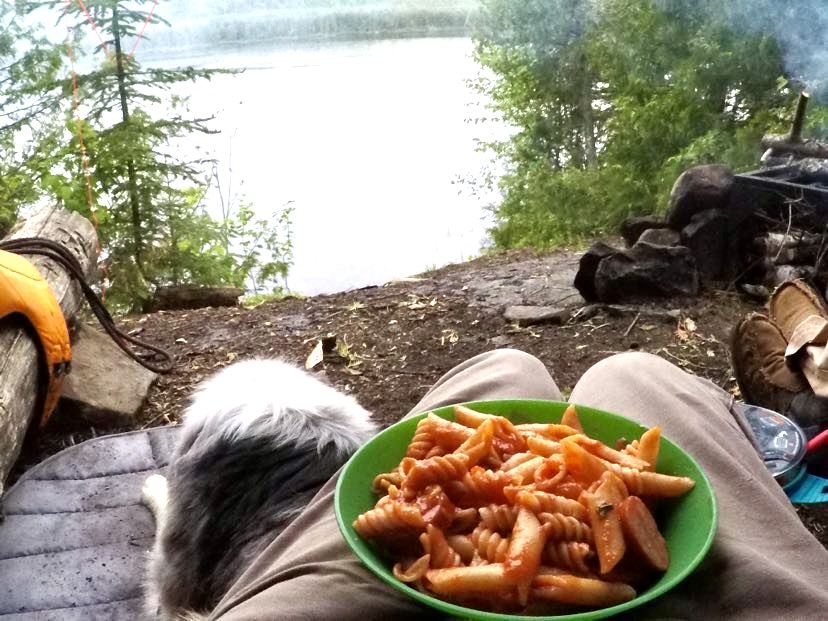
I like to eat. Like most people I enjoy a good meal. I enjoy it even more when I’m outside after a satisfying day in the wilderness. It’s true, everything tastes better outside (usually when you’re hungry). I maintain the best PB&J of my life was after a day of mountain biking the summer around 9th Grade. We were somewhere in Northern Minnesota off The Gunflint Trail, and had sandwiches from supplies in the back of an overheated van. With ingredients I never got at home. White bread, Skippy PB and squeeze jelly. My mouth is watering right now…..ugh….
Another favorite climbing meal? Something we started calling “Velveta” that’s Velveeta Shells and Cheese, but with a short ‘e’ sound. Why so special? It had a can of chicken in it. Now, I tried that in my kitchen. While that’s a meal I’d repeat on trail…..I 10/10 do NOT recommend at home. That said, I like to cook outside-not rehydrate. Sure some amount of backcountry cooking involves dehydrated something-but I’m a firm believer that it doesn’t have to be a staple.
Here are some of my tips:
Storage:
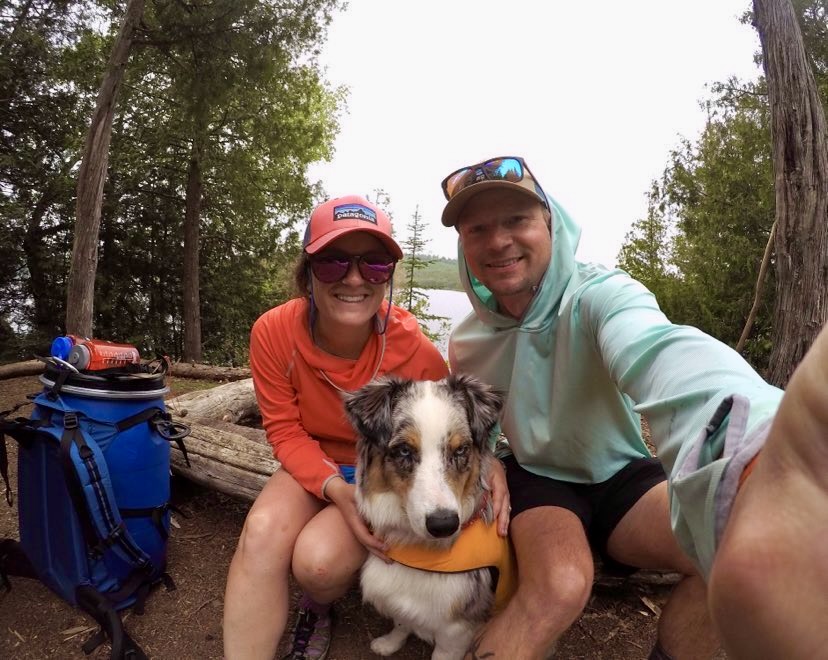
Ya’ll see that blue thing in the left of this photo? That’s our barrel. It’s made a lot of difference for us.
This is the harness from Granite Gear we use. This barrel carries so well with this harness we would both prefer to be carrying that over our other pack. We have 2 sized barrels, the 60L and the 30L….we usually pack smaller and lighter in the winter and use the smaller barrel-thats a different post. We fit all of our food and a lot of our ‘do no break’ items in there as well. It keeps chips and cookies from getting crushed and it also helps us to stay pretty organized. Best part? It’s bear resistant.
Black bears (and mostly other critters) are a thing in the BW. So leaving food in your tent or unattended at camp is a big No-No….you’ll be reminded when you pick up your permit too. Food should be hung in a tree or in a bear resistant or proof container. Since finding the right trigonometry to hang a bear bag well is harder than landing a Lake Trout-we opt for the bear resistant option. We’ve also added scent proof bags for really smelly items and might look into bear proof options in the coming years. We have never encountered bear activity-but we have seen the result of it, and of course friends have told us their encounters. Mostly we keep a very tidy camp. We follow all the standard Leave No Trace guidelines and do what we can to keep bears and other critters from taking interest in our location. This barrel helps us do just that.
Fresh Food:
On the first night, we often eat fresh food. That might be a steak dinner with real Mac and Cheese, broccoli and garlic bread-we had that several years ago on our ‘honeymoon’ trip. Or spaghetti with red sauce, cheesy bread and Cesar Salad. Our first day usually involves a lot of work-getting into the rhythm and some adjustments into the wilderness. A really tasty meal at night totally clinches it! If we are bringing meat-we just start the day frozen. Pre-made Hobo Dinners that you froze at home are great too if you are certain burn-bans won’t be in affect.
“Normal” Food:
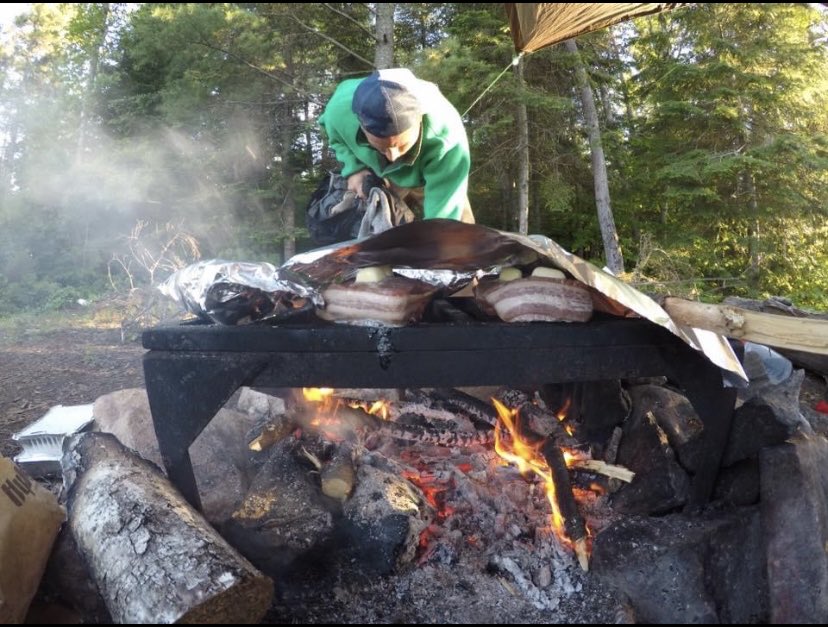
We usually eat a mix of ‘normal’-ish food, meaning food you can get right at the grocery store. One discovery last year is the ready made lunch like Pad-Thai. They are meant for your microwave, cooking with steam. They’ll reheat the same way with a little water and oil in your cooking pot. Taking it to the next level? Add a pouch of chicken and scramble and egg. Boom! Faster-tastier backcountry chicken Pad-Thai than the dehydrated version (and I think less sodium).
At Home Prep:
There is a spectrum of preparation to be had here. You have to make that choice for yourself. I choose the 50/50 approach. I’m not 0/100; buying all freeze dried, maybe repackage some items type….and I’m not 100% all in, making every calorie before hand, measuring-weighing and dividing for rehydrating after many man hours type either. I have found that if I want to make a pasta or rice meal in the backcountry-making it first at home, dehydrating it and then rehydrating it at camp is crazy fast. Example? I think I’ve mentioned Zatarain’s before. The red beans and rice is a staple for us. Brandon and I were both fans before meeting (it was destiny) thank you Paul Shirilla. If I make that on trail….it’s 20 mins before I give up and eat half cooked/half burned the bottom of the pot rice I now have to clean. If I make it at home? It’s cover with boiling water and wait 10 mins and enjoy….see the difference?
With pasta, it’s easy to cook, dehydrate and then rehydrate at camp rather than boiling it on trail. Using a small shell pasta works great-or if you don’t want to do the prep, egg noodles cook super fast and go great with instant pesto for example. Add some dried tomatoes, mushrooms, garlic (or fresh) plus a *pouch of chicken and look out world-we’re eating good tonight!
Packaging: Packing and RE-packing your food is a big part of the wilderness experience. As backcountry travelers we must ‘Pack in-Pack Out’. Simply unpacking your food from unnecessary packaging or placing it in multipurpose packaging will save you a lot of space and weight in the long run.
As a rule, cardboard boxes are discarded and things like snack bars are placed in zip-top bags. But Hannah, what about plastic?! Buy the expensive kind and re-use them…for several trips. By the time they hit the trash/recycle they have been reused countless times.
Organize by meal. We usually bring our reusable bags to the store, but near a trip I’ll collect a few plastic shopping bags to organize our food. Typically I can place all our main meals into 3 bags for breakfast, lunch and dinner. Then I label those bags with a little tape that says “lunch” and I know thats the bag I need for lunch without having to untie any of the bags. I do the same for breakfast, dinner and snacks. I’ve hinted before that coffee does not get skipped in the wilderness, it’s one of my favorite things, and I really don’t want to dig through a barrel to find it first thing in the morning. Best thing I’ve done? One clear bag that has all my coffee supplies that I place at the top of the barrel the night before-pro status right there.
Now because the ‘dinner’ bag has several dinners, and each meal often generates a certain amount of trash, I usually leave a handful of trash bags in each meal bag. Small bags like an old bread loaf bag work great for this purpose. You bust it out at the start of the meal and seal it at the end of the night. Then these small bags can get added to the large trash bag that collects throughout the entire trip. Gone are the days of reopening a 4 day old black bag and dripping 3 day old coffee grounds on your other food.
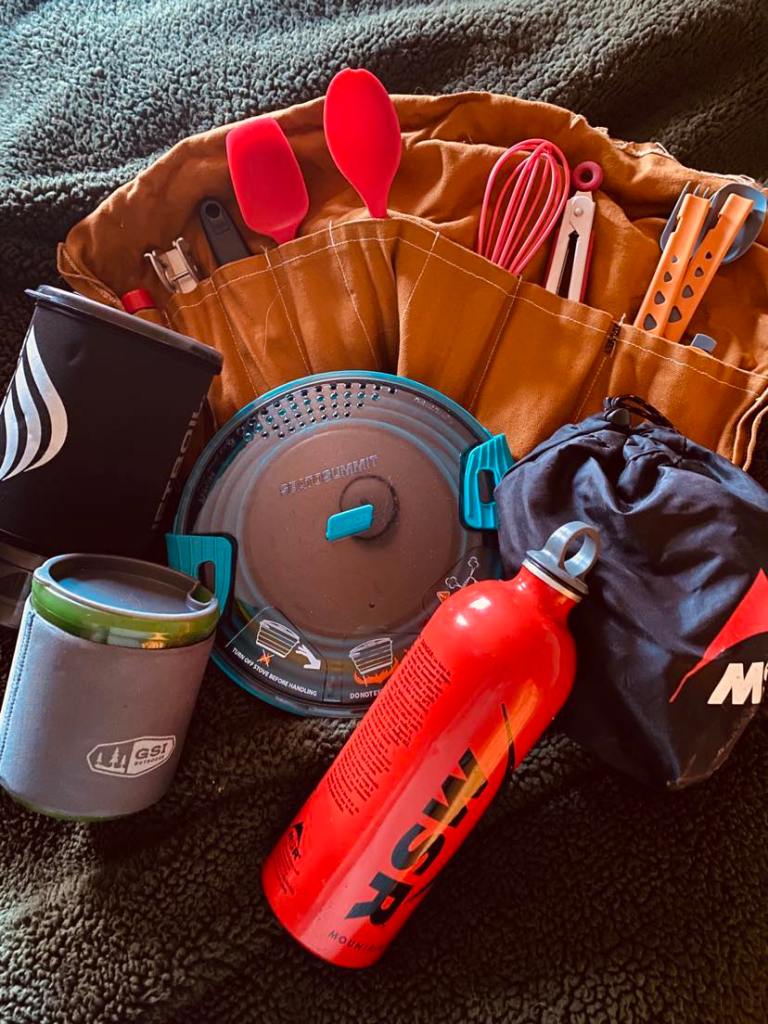
Cooking method: Regardless of what you pack, keep in mind your cooking method. Do you have options? If you want to keep your kitchen light with a JetBoil, you can’t effectively cook for 4 people unless you are strictly ‘cooking’ with hot water. If you want to make pancakes, or boil a big pot of soup, something like an MSP Whisperlite is the way to go. This stove gets some grief and 9 times out of 10 it’s user error. The Whisperlite or something similar is effective for a large groups or longer trips because you bring your fuel in liquid form (one of the only times cans are allowed) and the stove converts it to a gas to burn so you get a lot of bang for your buck, verses a stove like a Pocket Rocket that uses compressed gas. Those stoves are incredibly efficient, but the gas you bring is the gas you bring…plus it takes up space and can vary some based on temp (and altitude….its pressurized remember?).
No matter what, do yourself a solid and take the time to go through your menu (I like having a copy the group can refer to) and make sure you have the appropriate items for each meal. It really hurts to pack pancakes and no pan or spatula because you forgot….or instant soup but no pot large enough to boil it in. It’s also a great opportunity to ask yourself; Are pancakes the only reason for this pan? Is it worth it to pack syrup? Could we have a different meal with the supplies we are already planning for? This will help you pair down your kitchen, save dishes, weight and keep everyone happy!
Have FUN!!! Getting outside and planning a backcountry adventure should be a great time. I hope this guide has been helpful for YOU to enjoy the process.
Comment below and let me know what you think-follow along on Instagram too.
As always, I hope you have some time to get out and enjoy Days Off!
 daysoffadventureblog