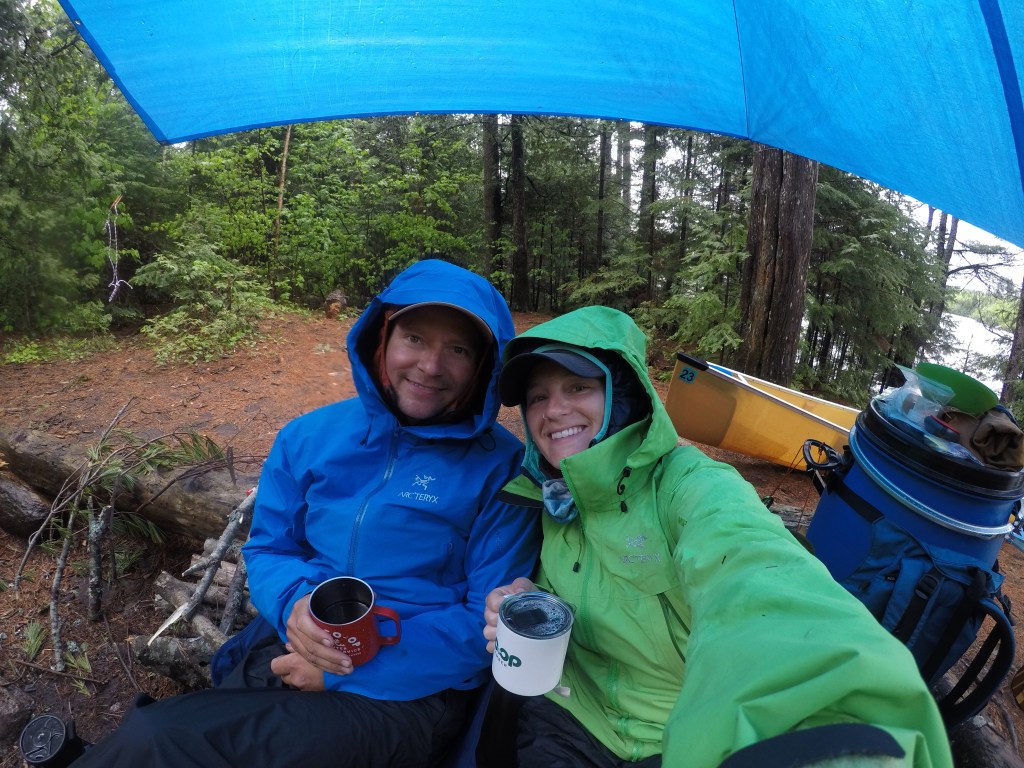
Rain Gear…..spring is here….currently down pouring in Minnesota and only 40 degrees….ugh.
We’ve all heard the phrase right? There is no bad weather-just bad equipment. And while I won’t agree, sometimes (more often that I’d like) the weather is crap. In fact, sometimes we feel personally targeted by bad weather. But when you are outside anyway, great equipment makes all the difference. I’ve mentioned puffy jackets before-blog post here.
Nice rain gear is another piece of equipment we rarely leave the house without. Tuck it up into the hood and put it in your pack…every single time you leave.
Great rain gear is both water-proof and there by wind-proof. Which means it’s a layer you wear more than when it’s raining. Windy days, cool days, snowy days and down right miserable days-our rain gear comes out. It holds in warmth, keeps you dry, it’s lightweight and you will never regret packing it.
Now I know somewhere in your mind you are thinking, “But I can get a plastic poncho for $5, it’s small and lightweight-all I need”. Rain gear is a layer…something you can wear even when it’s not raining. If all you want is to stay dry-a plastic sheet works great too. A poncho or cheap, poorly constructed and only water-resistant items don’t last, don’t stand up to wind, don’t move with you during activities and are simply not functional. Get yourself some rain gear you like-and that works for you.
But say you don’t have a great rain gear layer you love? Or yours needs replacing? You go shopping and see jackets that range from $99-$400 dollars and sport fabrics like Gore-tex, E-Vent, nylon DWR…..what do you choose?
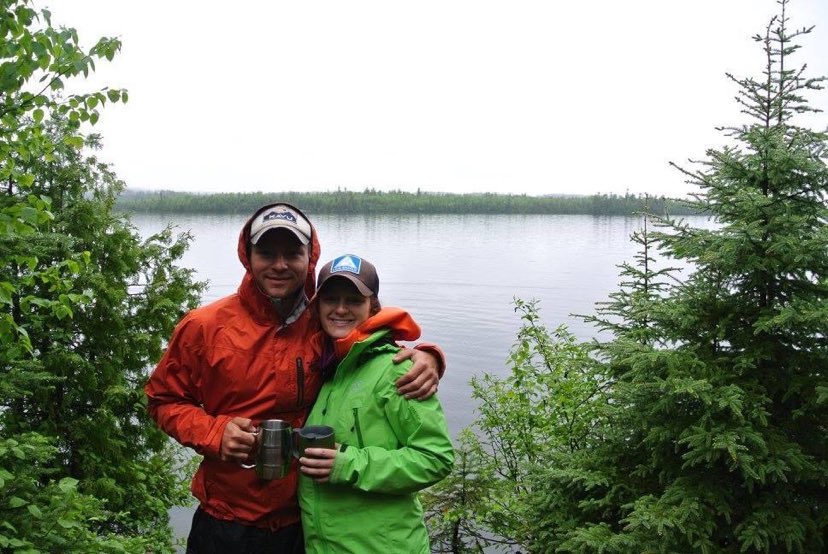
Let’s get a few things straight.
Water-Proof: If you are looking for rain gear, a jacket you can wear in the rain….you want water-proof. If you are seeing water-resistant, this is NOT the same. In this same subject, a water-proof jacket should have taped seams. This will look like about a 1/2 inch of shiny smooth space over the seam that’s been ‘taped’ keeping the jacket from leaking over the stitches.
Breathable: You will see this advertised a lot. A true water-proof jacket is also wind-proof, meaning….it’s not breathable. There are some exceptions to this that include more science than necessary for making a comfortable jacket. More on that later. In my opinion-this is something you can ignore. Breathability will come mostly from proper layers and venting.
Packable: Another feature used to pull you in. If you are buying a water-proof ‘hard shell’ meaning a water-proof jacket with no liner, it’s packable. Whether it folds into the chest pocket is pointless.
Hoods: You will often see ‘helmet compatible’ listed as a feature on high quality jackets. You want this. Climbing, mountaineering, ice climbing or biking…you want your hood to come over your helmet.
Pit-Zips: Many jackets will have zippers under the armpits to allow for ventilation, the only way to actually get breathability. You want these. Some people say they are silly, and I’ve seen a few jackets claim they aren’t necessary because of the breathability and they save weight without them-silly.
Bottoms: Get them. I would hesitate to spend too much on bottoms, and I would be less likely to get something with heavy Gore-Tex. I tend to put my pants through the wringer. When I need to sit but there isn’t anyplace clean? Just put on my bottoms! I have a pair that I got on super-super sale years ago that I still love. Brandon has a pair of Marmot PreCip bottoms that have been great for him (I am jealous of the full-zip). For me, what counts about bottoms is having them. I feel you are more likely to tear your bottoms, Gore-Tex or not, so I wouldn’t spend as much money knowing I’d likely need to repair or replace them more often. I am also usually not as concerned with breathability in my bottom layers-it is either cool and I’m well layered underneath or warm and I can wear shorts and not worry about my legs getting wet.
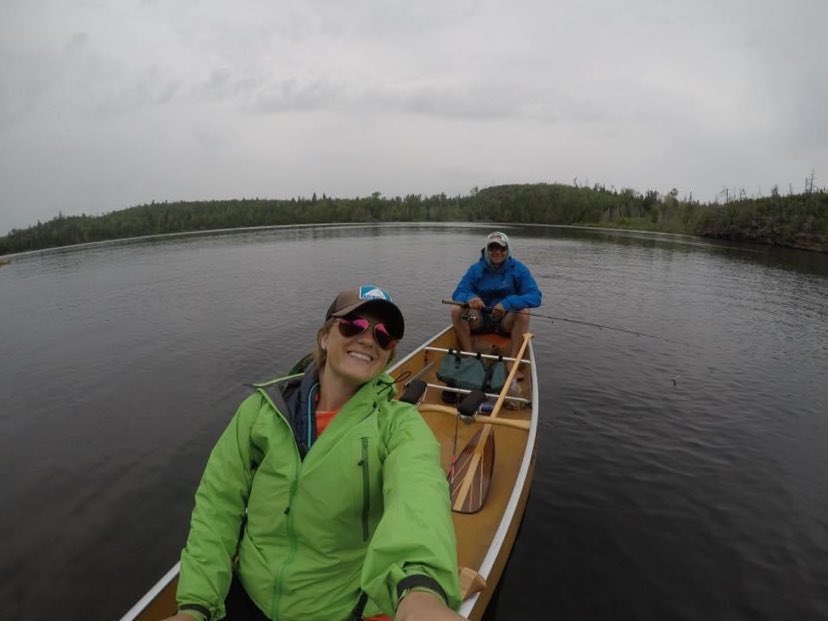
So let’s talk fabrics.
Gore-Tex (name brand) is a water-proof fabric that is used by several different companies. In terms of breathability, this is the best you can get because the fabric itself has pores. Now I said, breathability is basically not a thing. That’s because for Gore-Tex to let moisture out of the jacket, it must escape the pores in the form of vapor. That’s not inherently breathable. This also means your jacket needs to be cleaned properly to breathe at all, as well as maintain its water-proof ability.
You will find jackets in various layers of Gore-Tex. 2L, 2.5L 3L…they don’t mean liters. This is in reference to thickness, which is mostly related to durability. As a result, Gore-Tex is one of the best options for durability.
Nylon is the other fabric used in water-proof jackets. The nylon is coated with a laminate. So, a chemical is coated on the fabric that makes it water-proof. Like painting it with plastic. Fabric can only be so breathable this way. But it is effective at being water-proof. The down side is that because it is laminated, the fabric can also ‘delaminate’ meaning the water-proof layer can peal and flake off overtime. I’ve found that nylon coated jackets-if well taken care of-can last 5+ years. Gore-Tex, if well taken care of, can often last a little longer than nylon since there isn’t a coating to ‘delaminate’.
Many companies use a specific, and patented, coated nylon. Patagonia for example has H2No, The North Face has DryVent…
A basic nylon jacket can run you anywhere from $100-200 depending on layers, fit and brand. Gore-Tex jackets will run anywhere from $200-$500+ depending again on layers, brand and additional features.

Here’s my take. If you are going to mostly adventure in fair weather, and bring your jacket for the chance of rain, the misty days or the windy days….save the money and get a nylon jacket you love and take care of it. The Torrentshell line from Patagonia is wonderful. It’s hardy, technical enough for many adventures, and will last you several years while keeping you dry.
If you’ve read any other posts or watched any of our YouTube videos, you know we aren’t fair weather adventurers….we go out when we can, not when the weather is nice. That means it’s often times, in foul weather. We also do a lot of adventure in the winter and at altitude, where wet is cold and cold can kill. Being dry is of utmost importance at times. Those activities also often include ice axes or tools or skis (with sharp edges) so durability is important. Forking the money for Gore-Tex when it was time to replace our nylon jackets wasn’t hard.
How did we choose? We tried them on. I told myself “I won’t buy Arc’teryx, they are just too expensive”…then I tired on Gore-Tex jackets from several brands. I found many to be too boxy, baggy or lacking terribly in range of motion. Then I caved and tried on Arc’teryx and realized I was sold. The range of motion in the shoulders is excellent, the pockets are higher so you can reach them even with your jacket tucked into a harness, and they are well fitting for an athlete’s body. We love them.
They were an investment and we take good care of them-more on that later (pst….more tips on Instagram).
I hope you enjoyed reading folks, if this helps you shop for your next pieces of rain gear-let me know!
Don’t forget to follow/subscribe the blog to get insider tips. As always, hope you can get out and enjoy some Days Off!
 daysoffadventureblog