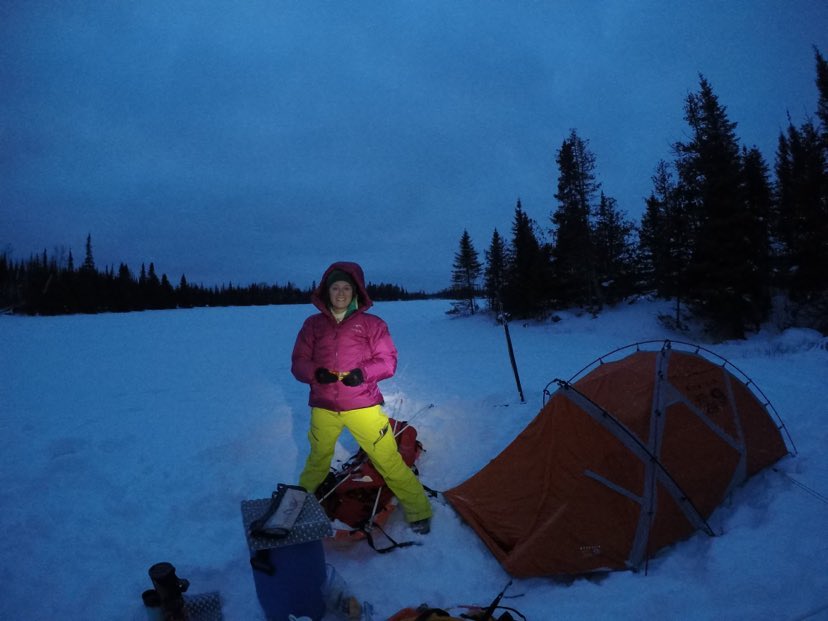
The Tent. Easily one of the key pieces of outdoor equipment for overnight adventures. It is usually an investment, and can make or break a trip.
Choosing a tent can be overwhelming. Vestibule? Freestanding? Footprint? These are really personal choices-after several years of sleeping under nylon, here’s my take.
In a traditional 3-season tent (unlike our winter/mountaineering tent above) you should have double doors and double vestibules. The vestibule is like your closet. Since shoes are not typically allowed in our tents (see also: “How to keep your tent looking new for 10+ years”) it gives you a dry spot to leave them, water bottles, packs or whatever else. It also helps when it is raining to have a spot to take off a rain jacket outside the tent first.
Double doors. Unless you are getting a single person tent, you’re sharing your living space. Double doors are key. For some this means not climbing over someone to get in and out-hello camp meal bathroom run!-for us, it’s organization. We usually use one door/vestibule as our ‘garage’ and the other as the front door.
Foot print. Ultralight gear gurus will tell you these aren’t necessary. They’ll say super thin plastic is cheap, effective and lightweight. I love a foot print. It is already cut to size, it will click into the poles of your tent so it doesn’t slide around, and I’ve found them to be totally adequate for weight and bulk. These are all things I look for.
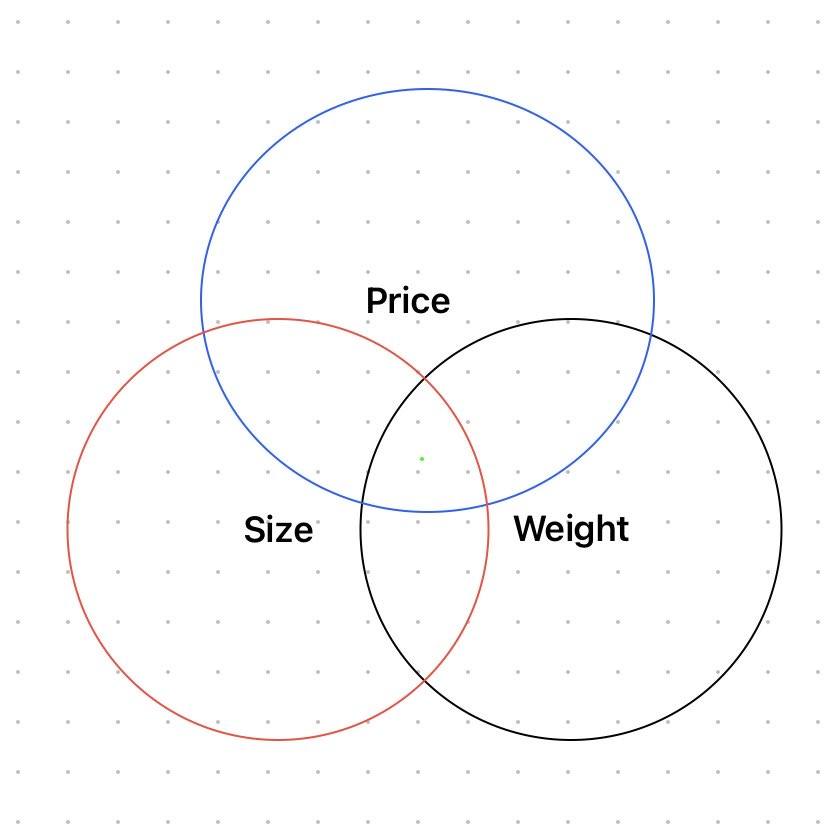
From there I like to use the diagram above, patent pending of course. Your ideal tent sits right in that middle section, a perfect blend in your budget, the size you want and the weight you are looking for. Think of the size you want, the weight you want and the price you’d be willing to pay. That is the very center. As you look for tents, you might find that you move to some blend of those other 3 center areas, sacrificing some weight to stay in your price range, or sacrificing some size to stay in your weight needs etc. You see? You’re searching for your unicorn, see what you can do to get close when you look at and compare tents.
Our favorite tent thus far is the Rock 32 from The North Face. It’s a 3-person tent. They don’t appear to make it anymore or something comparable otherwise this would be a gear review with 5 stars.
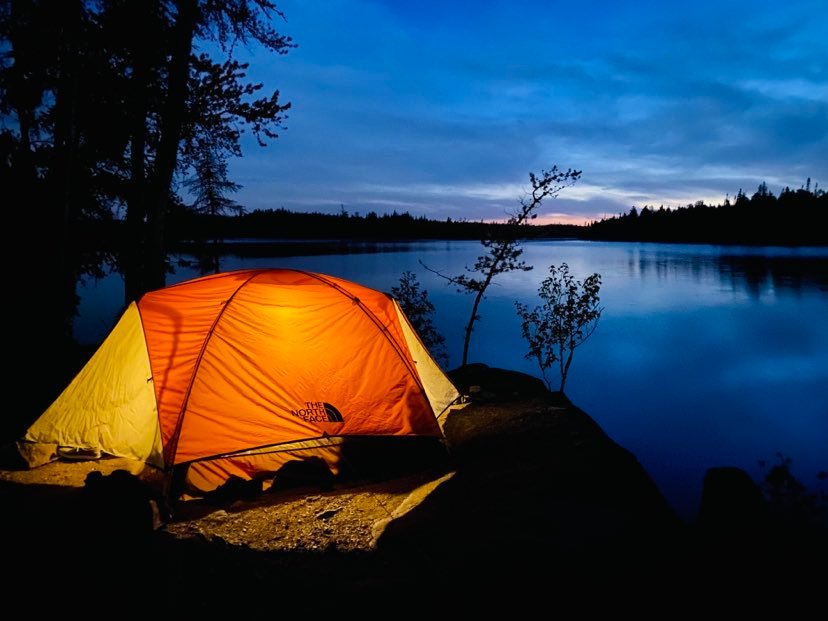
Double vestibules and doors, a rain fly that comes all the way to the ground* on all sides because the entire tent body is mesh. Like, set it up on a clear night and think you are sleeping without a tent mesh. Amazing air flow. As a 3-person tent it is spacious for 2 people. We can put gear or a pup with us, and fit a large double sleeping pad pretty easily.
It’s been light enough for backpacking a few nights and works for bike packing too. Recently we decided we were ready to invest in something lighter and smaller for those specific activities.
We chose the Big Agnes Tiger Wall UL 2.
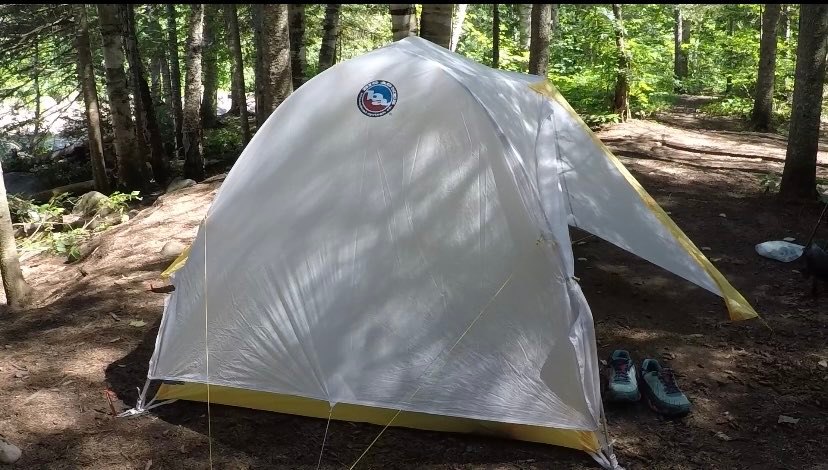
Once again, this tent has double doors and vestibules, a rain fly that comes all the way to the ground* but it’s made from ultra light fabric and it’s only a 2 person, so it’s smaller and lighter than our other tent.
At around 2 lbs, it also has enough head room for Brandon and I to both be sitting up in it. Big plus. It also comes in at $450. Very light tents, especially made from smaller specialty shops can easily run $900 and practically fit in your pocket. For us? That puts us too far off the price ratio on the Venn diagram. For us-this was our ideal tent.
Other things to consider? Freestanding or no. A freestanding tent means it does not have to be staked out to be set up. So you can set it up in your basement, or in a parking lot…..or in places that are really difficult to stake out a tent. Like lots of roots, rocks, even sand and snow. We often set up our tents in ‘adverse’ locations, so freestanding or at least ‘semi-freestanding’ as this one is, is a must.
Pole design. I’ve been setting up many tents, over many years. The simpler the pole design, the better. I find that as tents get more lightweight, they often try to configure wild pole designs to save weight.
The small things matter. Storage pockets, and many of them are clutch. I have also come to LOVE overhead storage. My headlight sits up there as my perfect tent light, zero effort. Also a perfect place for sunglasses-no crushed specs around here.
Color. I like my tents to stand out against the landscape. I’ve heard people disagree with this before. I don’t care. For no other reason, we could be easily spotted in case of emergency.
So far I’ve been talking about 3-season tents. As in Spring, Summer and Fall. They do make what is known officially as 4-season tents, but affectionally known as ‘The Fourth Season’. Meaning-4 season tents are only functional in winter.
Winter tents can be single or double walled-single walled meaning just one piece of fabric, no fly. Often these tents are also used as ‘mountaineering’ tents since camping on bigger mountains usually means winter conditions.
Winter tents won’t have footprints, usually less doors, and if you’re lucky-have a vestibule. There is a lot to consider in 4-season tents that deserve a separate post, but I will say that pole sleeves are a deal breaker. That goes for any tent actually.
Sleeves that your poles slip into have really fallen out of favor and for good reason. They are horribly inconvenient, especially in the winter, with snow, brittle fabrics and working with gloves. Small clips that hook over poles are light and easy to use. JUST SAY NO to pole sleeves.
* I have spent a rainy night or two in tents where the rain fly does not come all the way to the ground. The idea is that the nylon tent body comes up to meet the fly and saves weight. What this means is that water and mud splash up, soak the tent and everything is wet. I won’t do that.
That’s my take on tent shopping folks. Let me know if it was helpful if you’re looking for your first or next tent. Comment below! As always, hope you get some time to get out and enjoy some Days Off!
 daysoffadventureblog
[…] all a trade off between cost and weight. If you haven’t read my post about tents, head there now to see what I mean about finding a balance in what you are looking […]
LikeLike