The Day Pack. The bread and butter in any outdoor adventurer’s quiver. Your take everywhere pack, your ride or die.

If you have shopped for day packs lately it can be a little overwhelming. Nearly every brand makes one, the price range is so huge it doesn’t even make sense, and the size? Don’t get me started.
If you search ‘daypacks’ at REI.com you get 171 results, at Backcountry.com you get 300…so how do you navigate the field and get what works for you? Below I’ve divided packs into a few categories and come up with a few questions to ask yourself, in hopes that your shopping experience is more enjoyable and you labor actually yields the desired results: a daypack you can love and use for years to come.
To me, a daypack is 35 liters of less. More than that, and you are getting into the overnight catagory. Of course it can be used as a daypack, more on that later. (Hint: example 4)
Before you begin your search, as yourself a few important questions.
1) Price. Daypacks can range from upwards of $300 all the way down to $40 or less. With most outdoor things, you get what you pay for. Sometimes its features etc, and price will almost always get you longevity. Be honest with yourself about what your budget is. Which brings me to the next question.
2) Purpose. Are you wanting one pack to be the pack for all things for ever and ever? If that’s the case $300 might not look like that hefty of a price tag. If you use it minimum 52 weekends a year over 5 years, a $300 pack costs just over $1 each use. If you are hoping to have specialized packs for each activity, $300 might be a bit much to fork over. It is likely, even if you plan/or have more than one day pack, that you still want it to meet more than one need-ask yourself what you want it to do first.
Day hiking?
Commuting?
Specific activity based? Biking, Climbing, Skiing?
Strictly day use? Occasional overnight use?
Carryon use?
Travel?
When looking to invest in gear, I often think of it in terms of cost per use. In many ways this has saved me money over the years, and eliminated waste by not having to replace gear.
3) Comfort. Comfort will partly be determined by the purpose you intend to use it for. If you stretch a pack further and further outside of its realm of use it is likely to be less comfortable. Consider your willingness to be uncomfortable with your pack as you consider its possible uses.
If you have the opportunity-try them on!!! Packs fit everyone differently, put a little weight in a pack you are interested in, and have a stroll around.
I’ve divided packs into a few categories that might help you with your decision making.
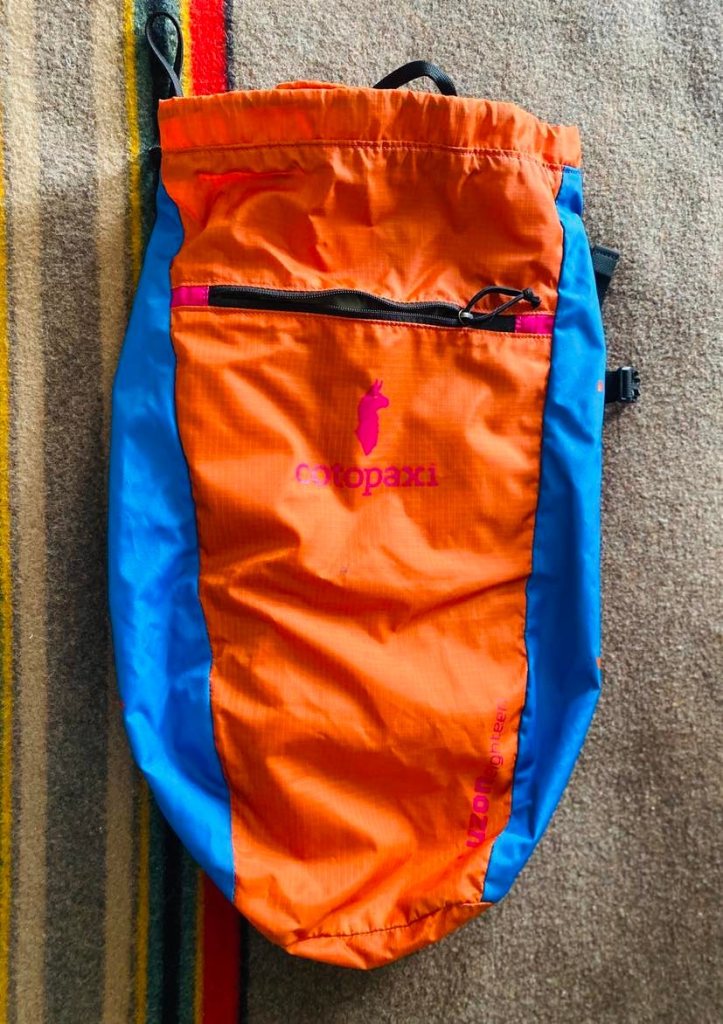
Catagory 1: The Summit Pack. I got this pack in a Cairn subscription box years ago. It is a single sac design, draw string top and somewhere around 20 liters. It has zero padding or shape, it is lightweight and has a crude but effective waist strap of just nylon to keep it secure. It also folds into its own front pocket.
A similar and popular design is the FlashPack from REI, which has a few more features than my example above and is under $40 making it a great choice. https://www.rei.com/product/201962/rei-co-op-flash-18-pack
A summit pack is a great option for a daypack, named as such as it’s the pack you bring to the summit with just the essentials, leaving anything bulky or heavy at camp. It is small enough you could keep it in your larger pack, but have something small for day adventures.
I use mine most often to toss in my luggage so I have a pack to use at my final destination without packing bulk. It works great as a lightweight pack on a multi pitch climb with snacks, water, a few layers and shoes for a walk-off. It doesn’t perform well with organization and it has very little bells and whistles. If you need to carry anything heavy, or oddly shaped, or need to get something quickly-its not that great. I would say unless you are looking for something specific to meet needs you have already identified-a summit pack is a great option.
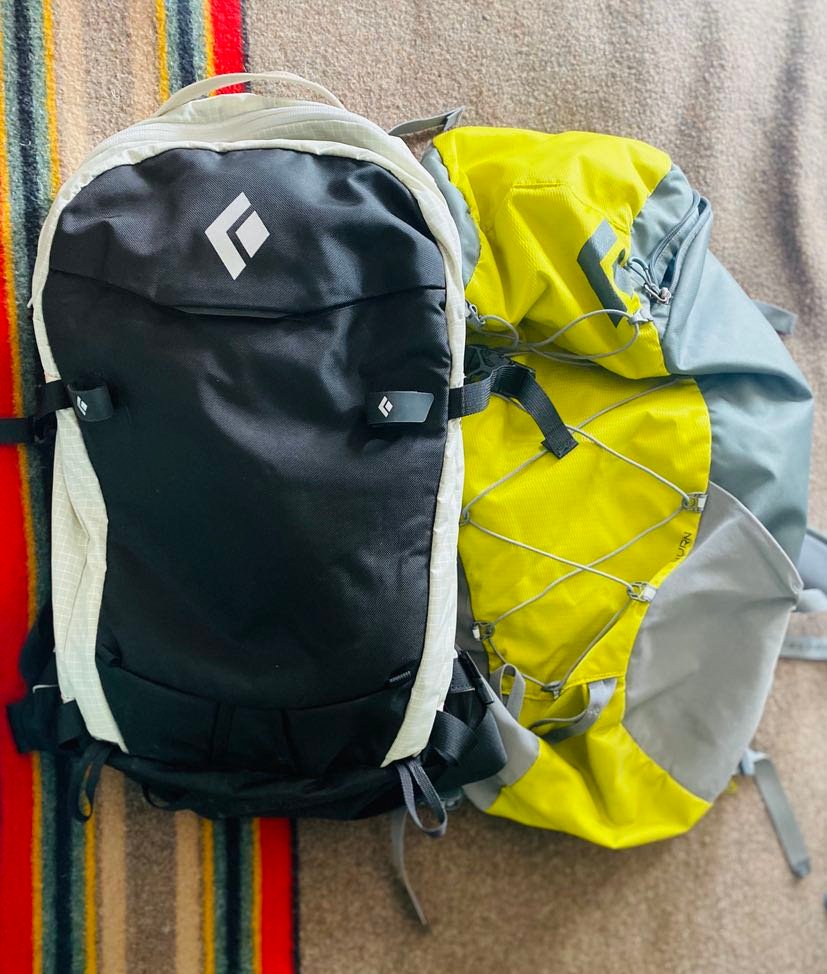
Category 2. Technical/Sport Specific Day Pack. I like to think of a technical day pack as having many of the amenities of a multi-day pack, but with less liters. Technical day packs often have compatibility for hydration bladders, some sort of frame adding immensely to their comfort, attachment points for tools/poles/axes etc and more organization. Many work as a carryon, and their structure makes carrying heavy or bulky loads significantly more pleasant. These packs are also more likely to be ‘sized’. This means they are more specific to one person (more comfortable). Typically packs are sized my torso length-pro tip…..get measured by someone else, preferably someone at a store that sells technical packs.
This pack from REI is a good example of a technical day pack on the market https://www.rei.com/product/176991/rei-co-op-ruckpack-28-recycled-daypack-womens
I’ve noticed many technical day packs are beginning to come standard with a waterproof cover as well. Big win.
Above are both examples of sport specific backs. The market is flooded with sport specific backs. Aside from the my pack used for backcountry skiing, which has a specific compartment for avalanche rescue tools so they can be efficiently deployed-I’d be less likely to go this route. Bike specific packs for example often boast a carrying system for helmets-when any helmet can clip into side compression straps without flopping around. Unless you want something for specific use, I would generally steer away from one.
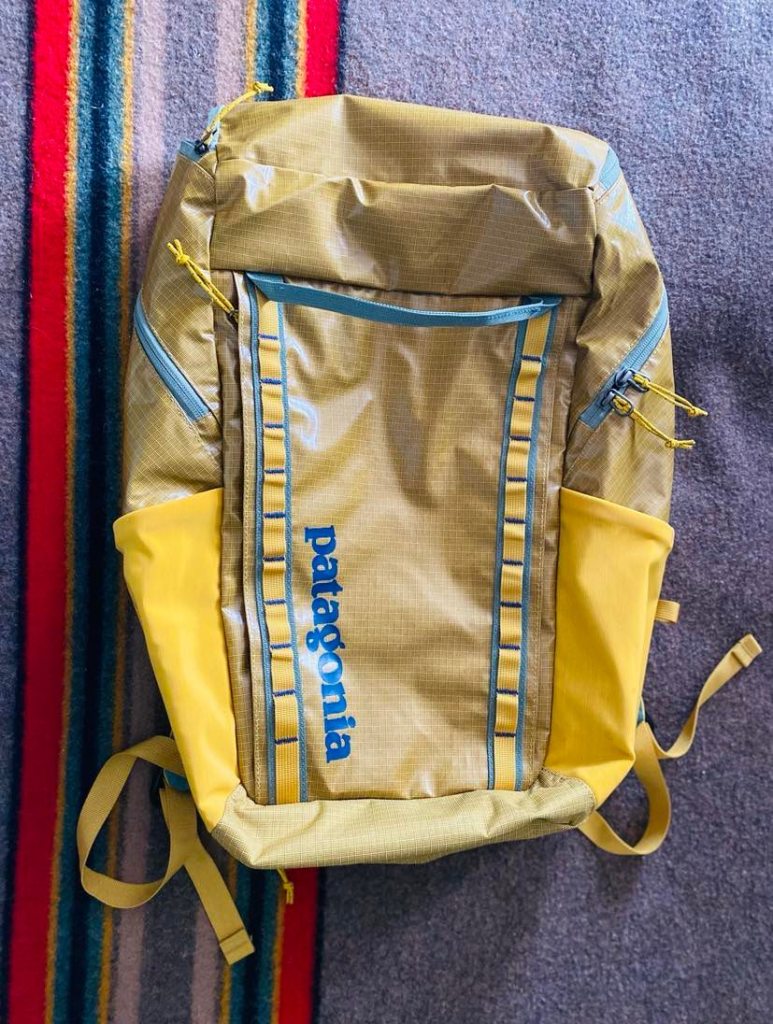
Category 3. The Commuter. I call packs like this ‘commuter’ packs because I consider their primary function to be their laptop sleeve.
These packs can work great in many other functions, but often their ability to protect your electronics would add weight making them less ideal for something else. The pack above protects my laptop perfectly and has more padded straps to help with the weight, plus the large main pocket is big enough to fit a weekends worth of goodies-so I love it as a carry on.
While this has the outer daisy chain, it doesn’t actually have many attachment points for specific use or a loop for storing trekking poles or an ice axe for example-knocking it out of the technical day pack category for me. If what you want first, is something to use in the front country everyday and second something you can use for an occasional hike-a pack like this is a wonderful choice.
They make these packs in two sizes, I like the larger one found here https://www.patagonia.com/product/black-hole-pack-32-liters/49301.html?dwvar_49301_color=LAGB&cgid=luggage-backpacks
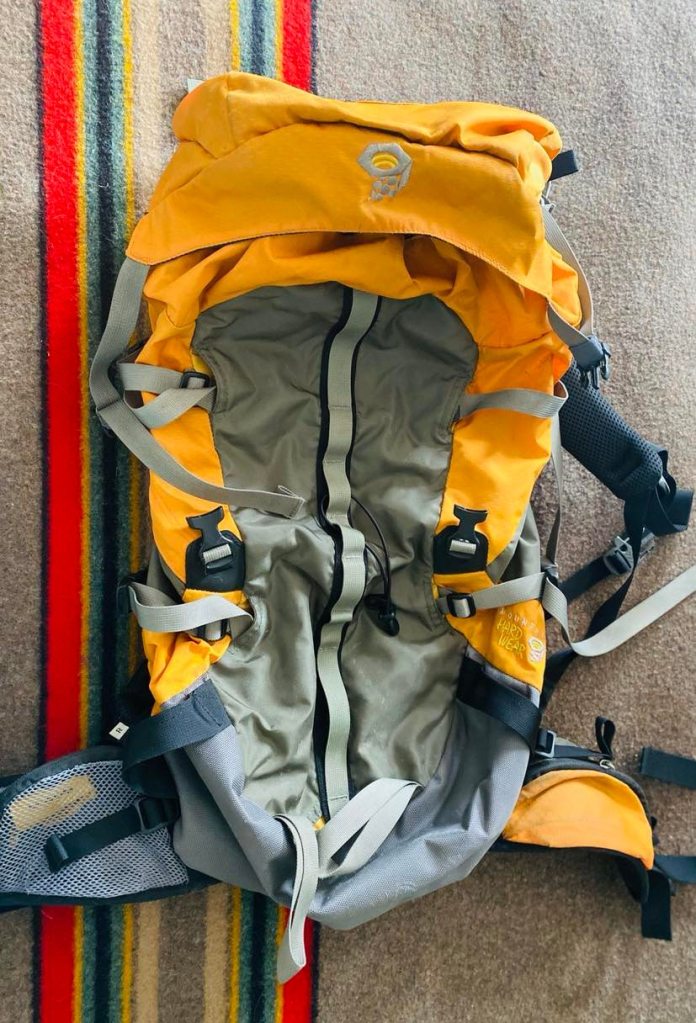
Category 4. Anything you take out for the day is a day pack. This well loved Mountain Hardware pack is actually 35+10 (base space is 35, but if you fill to the extended top you get an extra 10) liters, but compresses so well it carries items for a day outing very comfortably. If you pack light enough, it will also work for a 1-3 night adventure making this an extremely versatile pack. If you are hoping to get one pack to take for both outings in an occasional setting, this might be the scenario for you!
This 35L Mountain Hardware pack is a current example. Big enough for an overnight or two (or for packing bulky climbing gear) but pared down and light weight enough to use for a day pack. https://www.backcountry.com/mountain-hardwear-scrambler-35l-backpack
This one from Patagonia is another great option https://www.patagonia.com/product/ascensionist-alpine-climbing-pack-35-liters/47985.html?dwvar_47985_color=JOBL
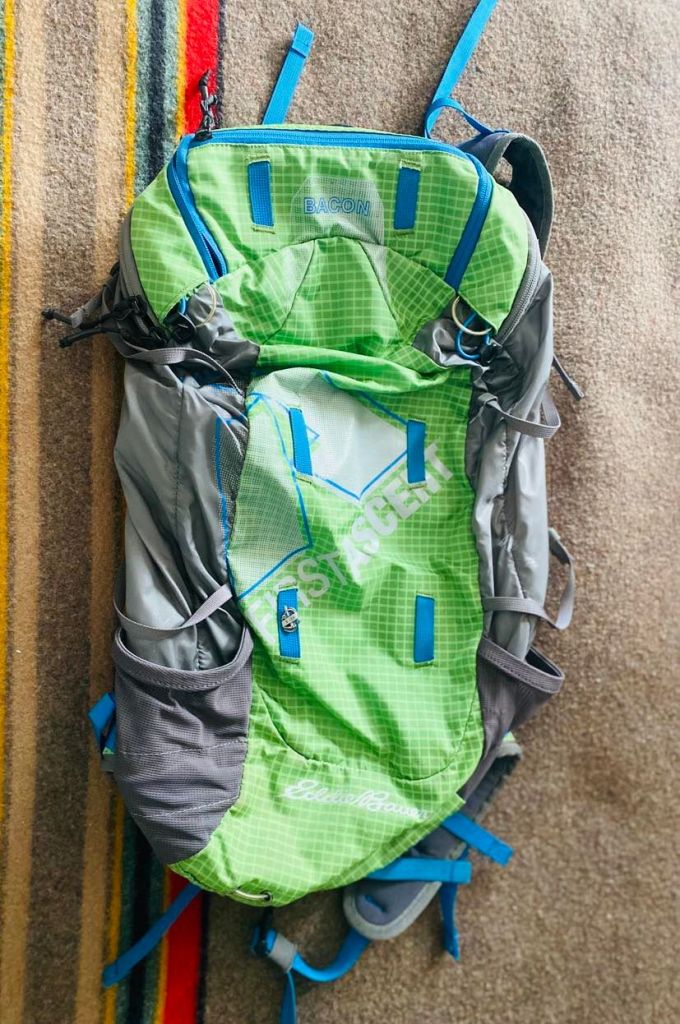
Category 5. Jack of all trades, master of none….but often times better, than a master of one. The pack above is the Bacon Pack from Eddie Bauer-so named because like bacon….everyone loves it.
I’ve had this pack for about 8 years, and it comes with me most everywhere. It isn’t perfect for anything one thing but its about 75% so it almost always ends up being the winner. Eddie Bauer still makes this pack in a 2.0 version. https://www.eddiebauer.com/p/82300060/bacon-2.0-pack?size=ONE%20SIZE
Very similar to mine. And shout out to their customer service, I broke a loop on my original less than one month into ownership-went to the store and they said, “bummer…I’m so sorry that happened to you-go grab another one!” Done.
This is actually a lightweight pack, folding into the lid pocket so its easy to slip into your luggage for later adventure. It has compression straps to get all of your gear into place and crammed into the under seat compartment too. The shoulder and waist straps offer just enough support without adding bulk, and the 2 pocket lid is just enough organization for a light weight pack.
In short-this pack (for me) comes pretty close to doing it all.
To summarize;
Summit Packs-lightweight, minimal, few features gets the job done.
Technical or Sport Specific Packs-perfect for people who want features, comfort and a pack for dedicated day use.
Commuter Packs-ideal for toting around computers and other goods. Typically not a lot of support or attachment points like a technical pack.
Overnight Pack-larger than your average day pack, but works if it compresses down nicely and you don’t want to be roped into something too small.
Jack of All Trades-lightweight, functional, lacking some in comfort but makes up for it in features.
There you have it folks, my take on Day Packs. Let me know if this helps! I’d love to hear your thoughts in the comments. Get geared up and enjoy some Days Off!
 daysoffadventureblog