
The 10 Essentials. What are they? Do you bring them? Are they necessary? How do you do it without over packing?
If you Google “The 10 Essentials” your first result is from REI. It’s a pretty compressive list and subsequent article.
They list The 10 Essentials as follows:
- Navigation
- Headlamp
- Sun Protection
- First Aid
- Knife
- Fire
- Shelter
- Extra Food
- Extra Water
- Extra Clothes
While I like this list, I think it warrants some important clarifications. If you leave for a day in the outdoors and I think I want/need two liters of water, I’m not going to carry three so that I have extra. And while sun protection is important, I think expanding on that subject is important
Below I’ve complied a list, explanation and plan for packing these essentials for any trip in the outdoors.
I find the The 10 Essentials to be most important when going out for the day. When you leave for a multi-day trip you are often packing these items regardless. I do have some thoughts on both though. My list is in a different order for no particular reason other than that’s how I organized my gear in photos!
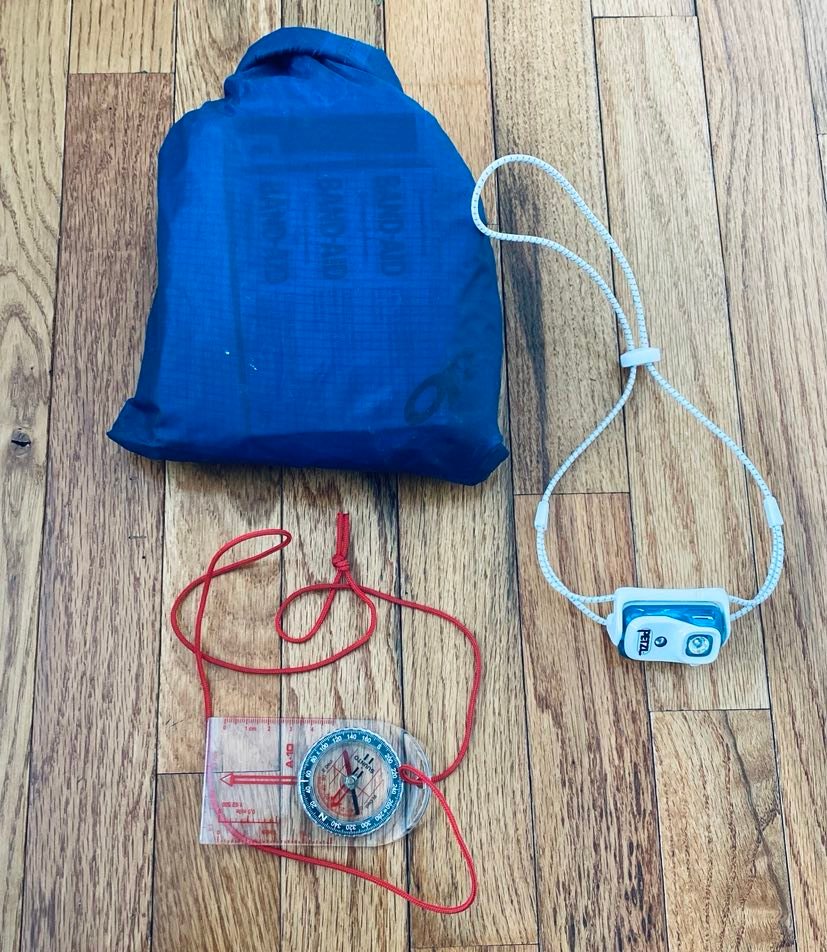
1). Navigation: Am I saying you should bring a map and compass for every hike? Even the 1 mile loop from the parking lot at your local park? Maybe not. But let me offer you a scenario. You pull up to a trailhead intending on doing your planned (well known) 3 mile loop you’ve done a million times. You’re meeting your friends and they’re bringing their dog (its a dog friendly place). You pull in and it is packed! There are people with their dogs, kids…its a circus. You and your friends decide to take a different, but similar loop, you’ve never done before and it looks straight forward, and you’ve been to this park a dozen times.
You don’t bring anything with you because you plan to be gone for 45 minutes, not even a picture of the trailhead map to reference or a compass. When you aren’t back to the parking lot after an hour, you wonder if you were moving slower than you thought-or if you took a wrong turn. The trail junctions are labeled, but you can’t remember which ones you were supposed to take for this loop. You know the lot you parked at is in the north side of the park, but its pretty cloudy, the tree cover is dense and you don’t actually know where in the sky the sun should be this time of year to base your location off it anyway.
You figure you can pull up GPS on your phone, but you don’t have service in this drainage/runoff spot in the park and you’ve never seen it before. You decide to retrace your steps, but you didn’t pay attention to your choices at trail junctions. You make it back, but it’s been three hours, your feet hurt cause you left in your Birkenstocks, the dog is thirsty, so are you, and those friends of yours decide they’d rather go home than enjoy post hike beers. The simple times are the ones that have the greatest potential to get you into trouble.
Even a compass and a photo from the trailhead map can do a lot if you get a little turned around. You can also take a class. That same list from REI also has a link to the classes they offer around the country, as well as great at home resources. If you don’t have working knowledge of a compass, a map bearing and field bearing-consider taking a class.
2). First Aid Kit: and the knowledge to use it. That’s how this should be listed. Longer post to come on this subject alone. Stay tuned. My first aid kit looks different depending on my activity. This waterproof blue pouch is my typical overnight/multi-day kit. For a day hike, I grab a smaller one with a few medications (ibuprofen) and mostly blister protection. Like navigation, if you don’t know how to use basic first aid-you might as well leave it at home.
NOLS is just one organization that provides classes for Wilderness First Aid. With or without medical knowledge, anyone can enjoy a two day Wilderness First Aid (WFA-woofa) course. 10/10 would recommend. If you want to take it a step further, NOLS also offers a 7-10 day Wilderness First Responder (WFR-Woofer) course that is shockingly compressive. Both classes are designed for non-medical students, and are delivered incredibly. If you spend even a few days in the backcountry every year, consider taking a class.
3). Headlamp: I like to think of this one, as a light in general, but it is always going to be a headlamp. I posted about my favorite headlamp and the reason to bring it, here https://daysoffadventureblog.com/2023/02/10/gear-review-petzl-bindi-headlamp/
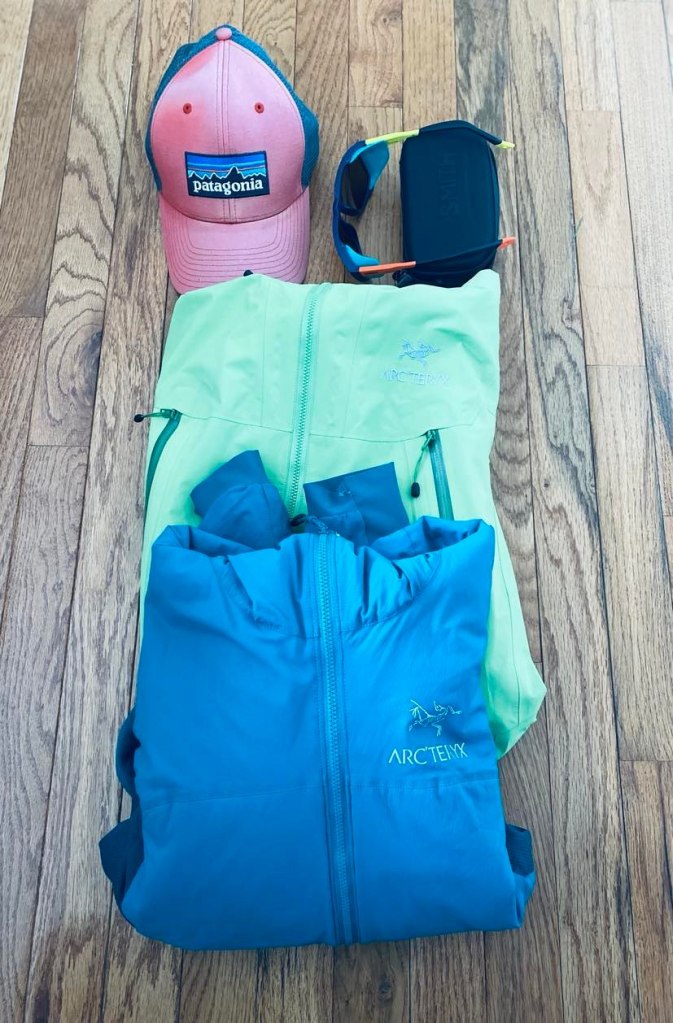
4) Layers: Notice I didn’t say ‘extra’. I don’t like this wording because it implies duplicates. Pack layers. I know it seems crazy, but when adventuring outside you are more likely to get hypothermia in warmer weather than colder weather-simply because you are prepared to be cold when it’s actually cold outside!
If you think about my navigation scenario from above. Imagine it was 80 degrees when you left, and you were sweating and wet. After 3 hours in damp clothes, in the shade of trees, with a slight wind….I bet you wish you brought a light weight shell, or tossed that fleece around your waist. Best case scenario you find the car and heated seats feel great. Worst case scenario, you sprain your ankle as you frantically try to ‘get found’ and you’re minimally mildly hypothermic when someone stumbles across you hours later.
They don’t weigh much-pack some layers you don’t necessary intend on needing.
5). Sun Protection: I like to think of this as environmental. Sun, bugs, wind….all things that might be separate from the actual temperature that can really effect your comfort at the very least, but also your safety. Above I also have sunglasses, these from Smith are a favorite https://www.smithoptics.com/en_US/p/sunglass/embark-performance-sunglass/20461783858QG.html
The side protection is removable, they are lightweight and polarized. I am very protective of my eyes.
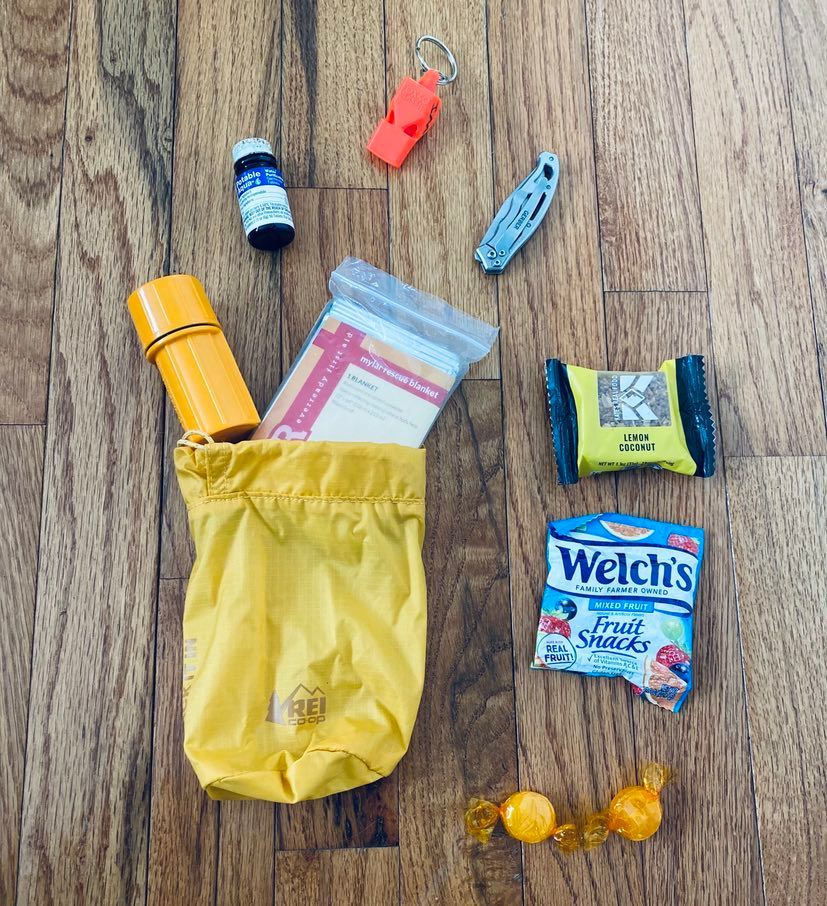
Everything in the photo above basically lives in this yellow pouch as my ‘Oh Shit Kit’. Its the partner to my first aid kit that comes with me on every outing small or large. I usually throw a few other items in there (the whistle is one, duct tape, cord….) but it rounds out the last items of the essentials.
6). Knife: Or multi-tool, whatever floats your boat. I typically find if I need the stuff on a multi-tool I already have it packed for the adventure. This is the knife that always comes with just in case, the knife I hope I never have to use. Just ask Arron Ralston…a knife is a good thing to have.
7). Shelter: I have an emergency blanket in every lid of over pack I own. I’m serious. I got a 10 pack for $10 on Amazon and I put one in every….pack….this one is a bonus because it weighs nothing. What’s that saying? Two is better than one? I spent a few hours with stuck ropes in the rain, on Devil’s Tower….I would have loved one of these then. I vowed to never be without one. If you’re on a multi-day adventure, you’ve already got a tent….packing this still doesn’t hurt.
8). Fire: Again if you are on a multi-day adventure you likely brought supplies for making a fire if they are allowed. On a single day outing or again in your “Oh Shit Kit” they are there for emergencies if you find yourself needing to signal, make water, keep warm etc. These are ‘stormproof’ matches I got as a Christmas present-thanks Mom. Pro Tip- if they are in your bag (cause you always bring them) and you find yourself in a hotel after an adventure cause you bailed due to weather and want to light a candle….DON’T I repeat DON’T use these matches. I said they were STORM PROOF. Which means you can not extinguish them under water. They will smoke. You will be very close to setting off the smoke alarms.
9). Extra Food: This is a scenario I find important to bring extra. Food you never intend to eat. Any overnight adventure we bring the same plastic bag with the same food. Two ramen pouches, two oatmeal pouches and two PB pouches. There are very few exceptions to us bringing that extra food. It can all be made with just hot water (assuming we have cook gear since its an overnight trip) they are quick to make and have a little sodium and protein to keep you going in a “we are out for an unplanned night” scenario. For a day hike, I always pack extra snacks. You’ve got the room, don’t be foolish.
10). Extra Water: I alluded to this before that I won’t pack more water than I deem necessary, but I do pack a way to get more in an emergency. For me, many of the places I recreate have water sources….so I’ll pack my sufficient amount for the day, but if I get lost or injured, I bring treatment tabs to have safe water to drink if I need it. Of course if drinking puddle water was the difference between me dying of dehydration and I didn’t have my tablets-I’d drink it and cross my fingers I had definitive medical care before Giardia took me down. But even if my hike was harder or longer than I expected (or my previous system for treating my water on an overnight failed) I’d have a way to treat more. The tabs are cheap, small and lightweight. Easy to have in your kit-with the intention to never use.
There you have it folks! That’s my take on The 10 Essentials. Tell me what you think in the comments: Do you pack these every time? More on your essential list? I’d love to hear from you. Thanks for reading, remember this list before you head out on your next adventure.
Happy Thursday, hope you can get out and enjoy some Days Off!
 daysoffadventureblog
[…] *https://daysoffadventureblog.com/2023/02/16/how-to-the-10-essentials/ […]
LikeLike